
Description
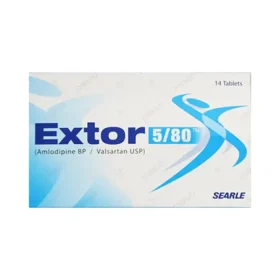
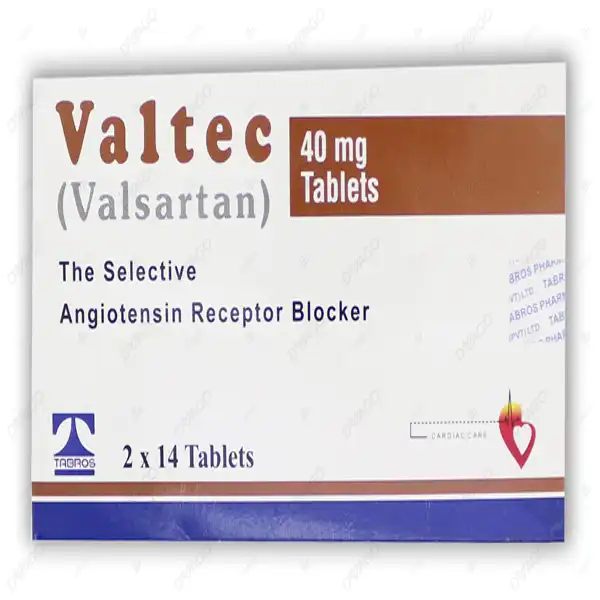
Valtec Tablets 40mg (1 Strip = 14 Tablets) Specification
Requires Prescription (YES/NO)
Yes
Generics
Valsartan
Used For
Hypertension
How it works
Valsartan blocks the vasoconstrictor and aldosterone-secreting effects of angiotensin II by selectively blocking the binding of angiotensin II to the AT1 receptor in many tissues, such as vascular smooth muscle and the adrenal gland. Its action is therefore independent of the pathways for angiotensin II synthesis.
Usage And Safety
Dosage
Hypertension : The recommended dose of Valsartan is 80mg once daily. The maximum antihypertensive effect is seen after 4 weeks. In patients whose blood pressure is not adequately controlled, the daily dose may be increased to 160mg. If additional blood pressure reduction is required, a diuretic may be added or the dose can be increased further to a maximum of 320mg. Valsartan also be administered with other antihypertensive agents. Heart failure : The recommended starting dose of Valsartan is 40mg twice daily. Titration upwards to 80mg and 160mg twice daily should be done to the highest dose tolerated by the patient. Consideration should be given to reducing the dose of concomitant diuretics. The maximum daily dose administered is 320mg in divided doses. An assessment of renal function should always be conducted in patients with heart failure. Pediatric population Children and adolescents 6 to 18 years of age :The initial dose is 40mg once daily for children weighing below 35kg and 80mg once daily for those weighing 35kg or more. The dose should be adjusted based on blood pressure response or as directed by your physician.
Side Effects
Common : Viral infections, neutropenia, hyperkalemia, dizziness, postural dizziness, vertigo, hypotension, orthostatic hypotension, renal failure and impairment.Uncommon : Upper respiratory tract infection, pharyngitis, sinusitis, insomnia, decreased libido, syncope, vertigo, cardiac failure, hypotension, cough, diarrhea, abdominal pain, back pain, fatigue, asthenia, headache and oedema. Rare : Dizziness.
Drug Interactions
Lithium , Non-steroidal anti-inflammatory medicines (NSAIDs), including selective COX-2 inhibitors, acetylsalicylic acid >3 g/day), and non-selective NSAIDs , inhibitors of the uptake transporter (eg. rifampin, ciclosporin) or efflux transporter (eg. ritonavir) .
Indication
Valsartan is indicated for the treatment of the following conditions: • Hypertension. • Heart failure (NYHA class II-IV) in patients receiving usual therapy (e.g. diuretics, digitalis) who are intolerant to ACE inhibitors. • To improve survival following myocardial infarction in clinically stable patients with clinical or radiological evidence of left ventricular failure and/or with left ventricular systolic dysfunction .
When not to Use
Valsartan is contraindicated in patients with:- Patients with known hypersensitivity to valsartan or to any excipient of the product.- Patients with severe hepatic impairment, biliary cirrhosis and cholestasis.- Second and third trimester of pregnancy.- The concomitant use of valsartan with aliskiren-containing products is contraindicated in patients with diabetes mellitus or renal impairment (GFR < 60 mL/min/1.73 m2).
Precautions
Precaution
Patients with primary hyperaldosteronism should not be treated with valsartan as their renin-angiotensin system is not activated.
Warnings
Warning 1
Concomitant use with potassium supplements, potassium-sparing diuretics, salt substitutes containing potassium, or other agents that may increase potassium levels (heparin, etc.) is not recommended. Monitoring of potassium should be undertaken as appropriate.
Warning 2
In patients with bilateral renal artery stenosis or stenosis to a solitary kidney, the safe use of valsartan has not been established. However, other agents that affect the renin-angiotensin system may increase blood urea and serum creatinine in patients with unilateral renal artery stenosis, therefore monitoring of renal function is recommended when patients are treated with valsartan.
Warning 3
In patients with mild to moderate hepatic impairment without cholestasis, valsartan should be used with caution.
Additional Information
Pregnancy category
Always consult your physician before using any medicine.
Storage (YES/NO)
Store this medicine at room temperature, away from direct light and heat.